

Does Insurance Cover Arson? Third-Party Arson vs Arson Suspicion

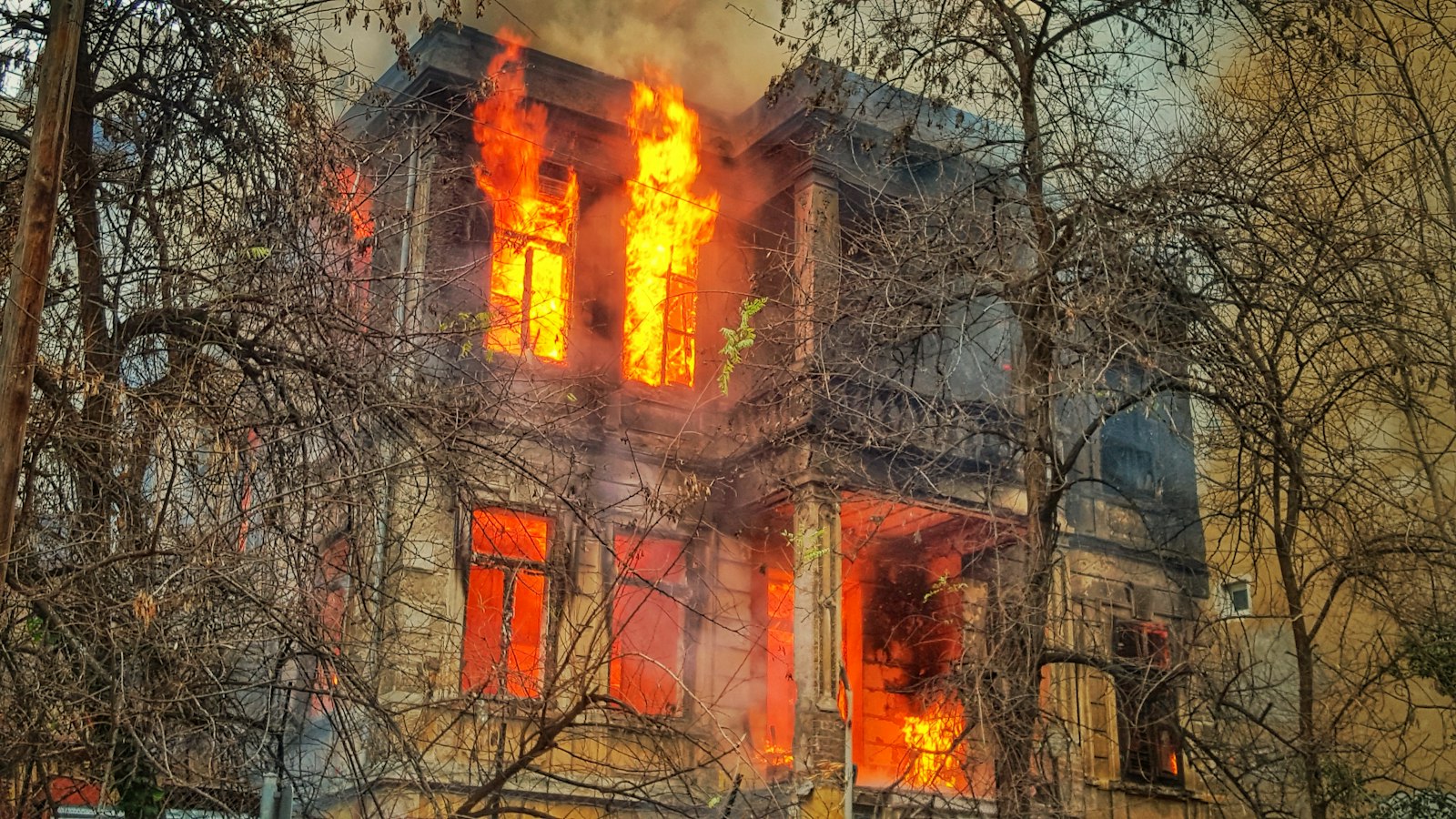
Arson raises two very different insurance questions. If someone else set fire to your home, you are the victim, and your policy usually pays. If your insurer suspects you or a member of your household set the fire, you face an investigation and possibly a denial. Does insurance cover arson? Here is how each situation works.
Arson by a stranger, vandal or someone outside your household
A fire set by someone who is not an insured under your policy is generally covered as a fire. The intentional loss exclusion in a homeowners policy applies to acts by an insured, not by outsiders. Report it to the police and the fire department, get a copy of the reports, and file your claim as you would for any fire. See the house fire claim process.
One exception: if the home had been vacant for more than 60 consecutive days, fires started by vandals may be excluded under some policies. See the vacancy clause.
When the insurer suspects the owner
If the fire is classified as incendiary (intentionally set) and the insurer suspects an insured, expect a detailed investigation. Insurers often look at:
- The origin and cause findings, including whether accelerants were found.
- Opportunity: who had access to the home and where everyone was.
- Motive: financial trouble, a pending foreclosure, a divorce, recently increased coverage, or contents removed before the fire.
- Prior claims and inconsistencies in statements.
The insurer may request a recorded statement, an examination under oath and financial records. See examination under oath and origin and cause investigations.
If you did not set the fire
- Cooperate fully and truthfully. Refusing to cooperate can be a separate reason to deny the claim.
- Get your own expert. An independent origin and cause investigator can test the insurer's conclusions. Fire science has changed over the years, and some indicators once thought to prove arson are no longer accepted.
- Preserve evidence and ask that the scene not be altered until your expert has inspected it.
- Talk to an attorney if the insurer is investigating you for arson or fraud, especially before an examination under oath.
- Keep records of where you were, who had keys, and any threats or disputes with others.
In a civil insurance case, the insurer generally has to prove arson by the insured, and in most states that is through circumstantial evidence of incendiary origin, motive and opportunity. A criminal charge is not required for an insurer to deny a claim.
Your examination under oath in an arson investigation
When arson is suspected, an examination under oath is very likely. The standard policy lets the insurer examine each insured while not in the presence of another insured, so spouses and co-owners are usually questioned separately. Answers are sworn and recorded, and you sign the transcript.
California gives policyholders specific rights in an examination under oath. The insurer may ask only about evidence that is relevant and reasonably necessary. It must give reasonable notice and pick a reasonably convenient place. You may bring a lawyer and record the whole examination. The insurer must send you the transcript or recording within 10 business days after it receives it, and you may make sworn corrections.
Refusing an examination under oath, or refusing to answer material questions, is a breach of the policy. In California, an insurer can deny for that breach without showing it was harmed. See recorded statements after a fire for how the informal statement differs.
Innocent co-insureds
What if one spouse or co-owner set the fire and the other had nothing to do with it? The answer depends on your policy wording and your state.
- The standard homeowners form says that if any insured commits or conspires to commit an act with intent to cause a loss, no insured is covered, including those who did not take part.
- Many courts and state laws protect innocent co-insureds, especially where the state's standard fire policy only excludes acts by "the insured," or where the policy language is unclear.
- Several states protect victims of domestic violence specifically. Washington, for example, prohibits applying an intentional act exclusion to deny an otherwise-covered property loss caused by domestic abuse by another insured, if the victim reports it to police, cooperates with the investigation and did not contribute to the loss.
If you are the innocent co-insured, get legal advice. Your recovery may be limited to your share of the property in some states.
How policy wording changes the innocent co-insured result
Small words matter here. An exclusion for intentional acts by "any insured" or "an insured" is written to bar every insured. An exclusion tied to acts by "the insured" is often read to bar only the person who set the fire. States split on how to apply these words. New Jersey courts, in an older case, enforced an "any insured" exclusion against an innocent co-insured. Massachusetts has a statute that protects innocent insureds.
Where innocent co-insureds are protected, some states limit the payment to the innocent owner's share. As an illustrative example only: on a $300,000 covered loss, an innocent spouse who owns half the home might recover $150,000. Read your policy's intentional loss exclusion and your state's standard fire policy together, and get legal advice.
The mortgage company
Even if the owner's claim is denied for arson, the mortgage lender is usually protected under the policy's mortgage clause and can still be paid.
Fraud is the other risk
Insurers also deny claims for misrepresentation during the claim, separate from arson. Answer questions honestly and correct mistakes promptly.
Common questions
Will insurance pay if someone else set fire to my house?
Yes. Arson by a stranger, vandal or someone outside your household is generally covered as fire. Vacancy conditions in some policies can affect vandalism-related fires.
What if my spouse set the fire?
Many states protect innocent co-insureds, especially in domestic violence situations, if they did not take part and cooperate with the investigation.
What should I do if the insurer suspects me of arson?
Cooperate, keep records, and talk to an attorney. See origin and cause investigations and examinations under oath.
Will my spouse and I be questioned together?
Usually not. The standard policy lets the insurer examine each insured under oath while not in the presence of another insured.
Can the insurer deny my claim if I skip the examination under oath?
Yes, in many states. Refusing it, or not answering material questions, breaches the policy. In California, the insurer does not have to show it was harmed.
Help with an arson investigation
ClaimWarriors helps policyholders present fire claims, including those under investigation, and works with attorneys when needed. See why insurers deny fire claims, or contact us for a claim review.
This article is general information, not legal advice. If you are being investigated for arson, consult an attorney. Last reviewed November 2026.




