Is Theft Covered by Homeowners Insurance? What the Policy Requires

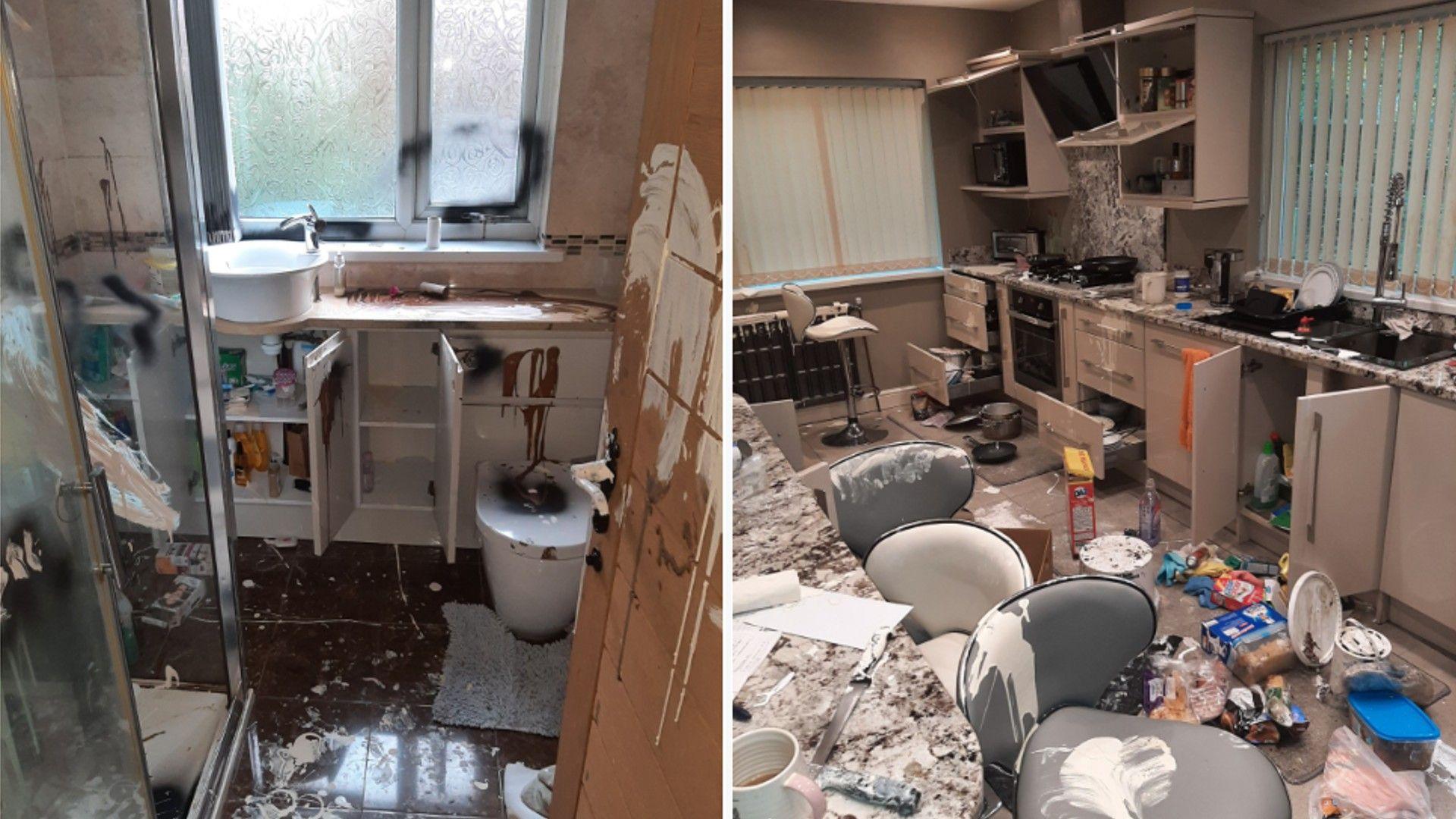
A break-in leaves two problems. One is the damage to the house: a forced door, a broken window, a cracked frame. The other is what was taken. Both can be covered by a standard homeowners policy, but the theft part comes with conditions that surprise people. Theft is not a common claim. Triple-I figures based on ISO data for 2019 to 2023 show about 0.12 theft claims per 100 insured homes a year, with an average payment of $5,524. Because most people file one rarely, they learn the rules for the first time after the loss.
Is theft covered by homeowners insurance?
Yes. In the standard homeowners form (ISO HO-3), theft is one of the named perils for personal property. Your belongings are covered while they are anywhere in the world, so a bag stolen from a hotel room is treated much like a laptop taken from your living room. The house itself is covered on an open perils basis, so damage the thief does to doors, windows and locks falls under dwelling coverage unless an exclusion applies.
What counts as theft
The standard wording includes attempted theft and the loss of property "from a known place when it is likely that the property has been stolen." That second part matters. If a ring sat in a dish on your dresser and is gone after a week of open houses, you know where it was and theft is the likely explanation. A ring you think you lost somewhere on vacation is different. The base policy does not cover property that is simply lost. Scheduled jewelry under an endorsement is treated differently. See jewelry theft limits and scheduling.
What the theft peril excludes
The standard form does not cover theft:
- Committed by an insured, which includes members of your household who are covered under your policy.
- In or to a dwelling under construction, or of building materials, until the home is finished and occupied.
- From the part of your home you rent to someone who is not an insured, such as a lodger's room.
- Away from your home of trailers, campers and watercraft, or of property kept at another residence you own, rent or occupy, unless you are temporarily living there.
Students get a specific rule. Property of a student who is an insured is covered at the place they live for school, as long as the student was there at some point in the 90 days before the theft.
Belongings at a second home
Property usually kept at another residence of yours, other than the insured home, is limited to 10% of your personal property limit or $1,000, whichever is greater. A vacation cabin full of tools and electronics can outgrow that limit quickly.
Special limits for theft
Some categories have their own caps no matter how high your personal property limit is. In the standard form:
- Money, coins, bank notes and stored value cards: $200.
- Securities, deeds, passports and tickets: $1,500.
- Jewelry, watches, furs and precious stones: $1,500 for loss by theft.
- Firearms and related equipment: $2,500 for loss by theft.
- Silverware, goldware and pewterware: $2,500 for loss by theft.
- Business property: $2,500 at home and $1,500 away from home.
The jewelry, firearm and silverware caps apply only to theft. A ring destroyed in a fire is not held to $1,500. Your declarations page and endorsements may change these numbers. See how to read your declarations page.
The police report is a policy condition
The standard form lists your duties after a loss, and one of them reads "Notify the police in case of loss by theft." Do it the same day you discover the loss, even if you think the police will not investigate. Get the report number and the officer's name. If cards were taken, the policy also expects you to notify the card company. The insurer can deny coverage for a missed duty only if the failure hurt its position, but a late or missing police report is the easiest way to give it that argument.
Proving what was taken
Theft claims are about proving that items existed. The policy asks for an inventory showing the quantity, description, actual cash value and amount of loss for each item, with any bills, receipts and related documents. Useful proof includes:
- Online order histories, bank and card statements.
- Photos and videos that show the item in your home, even in the background.
- Boxes, manuals and warranty cards with serial numbers.
- Appraisals for jewelry and art.
The insurer may also ask for a signed, sworn proof of loss. Under the standard form you have 60 days after the insurer's request to send it. See how to build a contents inventory and how a proof of loss works. The same methods work after a theft. Our theft claim guide covers the paperwork from the first call to payment.
Statements and questions
Insurers look closely at theft claims because nothing is left to inspect. Expect questions about who had access to the home, when you last saw each item and how you bought it. Answer accurately and do not guess. If the insurer asks for a recorded statement, prepare first. See how recorded statements work.
How stolen items are valued
The base form pays personal property at actual cash value, which is replacement cost minus depreciation. Many policies add a replacement cost endorsement for contents, which usually pays the depreciation once you actually replace the item. See actual cash value vs replacement cost.
Example: a burglary and the special limits
Illustrative numbers: a burglar forces the back door and takes a laptop ($1,400 to replace), a television ($900), a ring ($4,000) and $600 in cash. The door and frame cost $1,100 to repair. The full loss is $8,000. The policy has contents replacement cost and a $1,000 deductible. Within the special limits, the payable items are $1,400 for the laptop, $900 for the television, $1,500 for the ring, $200 for the cash and $1,100 for the door, or $5,100.
How the deductible comes off changes the check. Many insurers subtract it from the $5,100 and pay $4,100. Others start from the full $8,000 loss, subtract the $1,000, and then apply the special limits. The $7,000 left is still more than the limits allow, so the deductible is absorbed by the part of the ring and cash the policy does not cover, and the insurer pays $5,100. Ask the insurer which method it used and why.
Items taken from your car
Belongings stolen from a vehicle are a homeowners or renters claim, while the broken window is an auto claim. See items stolen from your car.
Common questions
Do I need a police report for a theft claim?
Yes. The standard homeowners form makes notifying the police one of your duties after a theft loss.
Is a lost item covered as theft?
Usually not. The theft peril covers property missing from a known place when theft is the likely cause. Simple loss is not covered unless the item is scheduled under an endorsement.
Does homeowners insurance cover theft by a family member?
Not if that person is an insured under your policy. Theft committed by an insured is excluded.
Is cash covered if it is stolen?
Only up to $200 in the standard form.
Does one deductible apply to the stolen items and the broken door?
In the standard form the deductible applies to the total of all loss payable from the occurrence, so one deductible covers both.
Help with a theft claim
ClaimWarriors builds the inventory and proof a theft claim needs and pushes back on limits applied to the wrong items. The fee is free unless we win. Learn how we handle theft and vandalism claims. Contact us for a claim review.
Statistics from Triple-I (ISO data, 2019-2023). Examples are illustrative. This article is general information, not legal advice. Policy limits and wording vary; your policy controls. Last reviewed November 2026.