

Total Loss House Fire: Your Claim, Mortgage and Rebuild Options

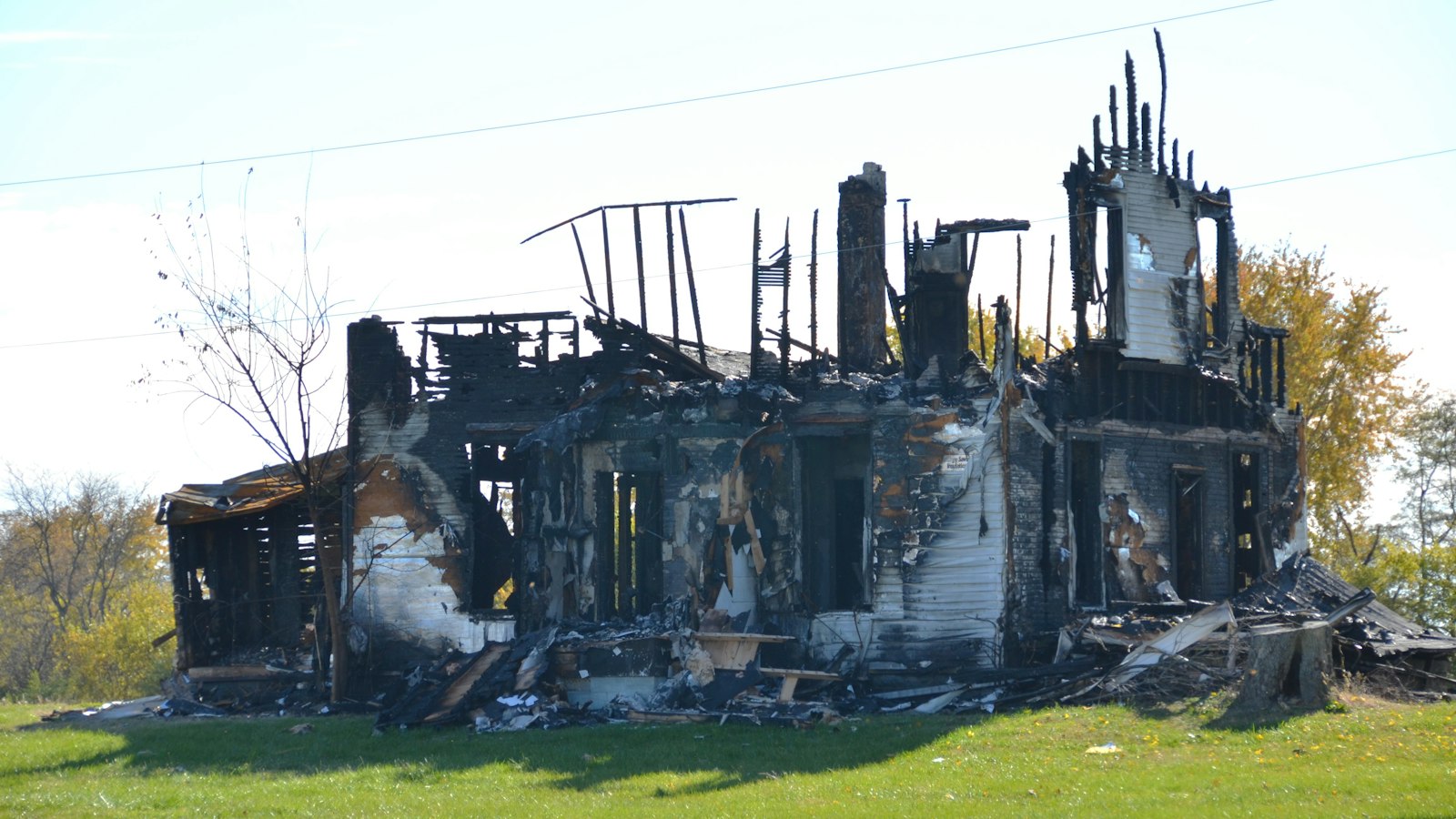
A total loss house fire changes the claim from "fix what is damaged" to "replace everything." That shift raises questions most homeowners have never had to answer: Is my dwelling limit enough? What happens to the mortgage? Can I buy a different house instead of rebuilding? Do I really have to list every item I owned?
This guide answers those questions in the order you will face them. It assumes a standard homeowners policy (HO-3 or similar). Read your declarations page and endorsements alongside it.
What makes a house a "total loss"?
A home is an actual total loss when it is destroyed. It can also be a constructive total loss when the remaining structure cannot reasonably be repaired, or the cost of repair is close to or above the cost to rebuild. Insurers sometimes argue a badly burned house can be repaired around a surviving foundation or walls. If engineers or the building department say those elements cannot be reused, get that in writing.
Valued policy states
Some states have valued policy laws. In those states, when a covered peril totally destroys an insured building, the insurer must pay the full dwelling limit on the policy rather than a lower calculated rebuild cost. Among the states ClaimWarriors serves, Minnesota, Nebraska, North Dakota, South Carolina and West Virginia have such laws, though the property and perils they cover vary by state. If you live in one of these states and your home is a total loss, ask the insurer in writing how it is applying the statute.
See valued policy law states for which states have these laws. Manufactured homes have their own rules. See manufactured home fire claims.
The dwelling claim: limits, extended coverage and underinsurance
In most states, a replacement cost policy pays what it actually costs to rebuild, up to your dwelling (Coverage A) limit. The common problem is that the limit was set years ago and is now below current construction costs. Check your declarations for:
- Extended replacement cost, which adds a percentage (often 20% to 50%) above the dwelling limit.
- Guaranteed replacement cost, which is rarer and pays the full rebuild cost regardless of the limit.
- Inflation guard endorsements that raised the limit over time.
If your limit falls short, see underinsured after a house fire and extended vs guaranteed replacement cost.
Remember that other coverages sit on top of the dwelling limit and are often forgotten in a total loss:
- Other structures (Coverage B): detached garages, sheds, fences. Commonly 10% of the dwelling limit.
- Debris removal: the standard form adds up to 5% of the limit when the damage plus debris removal exceeds the limit.
- Ordinance or law: code upgrades required for the rebuild. The standard HO-3 provides up to 10% of the dwelling limit. See ordinance or law coverage after a fire.
- Trees, shrubs and landscaping: up to 5% of the dwelling limit under the standard form, with a per-tree cap.
Clearing the site is often the first large expense. See debris removal coverage. For barns and farm buildings, see farm and barn fire claims.
Our article on how fire insurance claims are calculated shows how these pieces add up.
Rebuild, buy elsewhere or sell the lot?
Under a typical replacement cost policy, the insurer first pays the actual cash value of the dwelling (rebuild cost minus depreciation). The difference, called recoverable depreciation, is paid when you actually rebuild or replace. That structure shapes your options:
- Rebuild on the same lot. You can collect the full replacement cost, up to your limits, as the work is completed.
- Buy or build elsewhere. Many policies limit replacement cost to rebuilding on the same premises, but some states override that. California, Colorado and Oregon (after a declared emergency), for example, allow you to rebuild at a new location or buy an existing home and still collect replacement cost (measured by the cost to rebuild at the original location). Elsewhere, ask the insurer to agree in writing before you commit.
- Sell the lot and do not replace. You can usually keep the actual cash value payment, but you may give up the depreciation holdback. Run the numbers before deciding.
Deadlines matter here. The standard form requires you to tell the insurer within 180 days of the loss that you intend to repair or replace. State laws often give longer, especially after declared disasters. See recoverable depreciation after a fire.
If you decide not to rebuild, see selling a fire-damaged house and keeping leftover insurance money. If you do rebuild, see rebuilding after a house fire.
What happens to your mortgage
Your lender is named on the policy, and dwelling payments are made out to both of you. Keep paying the mortgage after the fire. Missing payments can change how the lender handles the insurance money.
If you rebuild, the lender's loss draft department usually holds the funds and releases them in stages as work is inspected. If you do not rebuild, the lender will generally apply the dwelling proceeds to the loan balance, and any amount above the balance goes to you. Our guide to the mortgage company holding the insurance check explains the draw process and how to speed it up.
Contents in a total loss
Your personal property limit (Coverage C) is often 50% or more of the dwelling limit, but you only collect what you can document. Most policies require an itemized inventory even when everything is gone. Some states change that after declared disasters: California requires 60% of the contents limit (up to $350,000) without an inventory after a declared-emergency total loss, Colorado requires 65% after a declared wildfire, and Oregon requires 70% after a total loss in a declared disaster. Outside those rules, you can ask the insurer to accept a grouped or category inventory, or to waive itemization if your losses clearly exceed the limit. Our house fire inventory list guide shows how to rebuild a list from memory, photos and records.
Living expenses during a long rebuild
Additional living expenses pay the increase in your living costs while you are displaced. In a total loss, the rebuild can take one to two years or more, so the time limit and dollar limit on Coverage D matter. Request extensions in writing before the limit runs out. See additional living expenses after a house fire.
A total loss checklist
- Get a complete certified copy of your policy, including every endorsement.
- Ask the insurer in writing for the replacement cost estimate it used for your dwelling.
- Get your own rebuild estimate from a contractor familiar with current local costs and code.
- Confirm your extended replacement cost, code upgrade and debris removal limits.
- Start the contents inventory, or ask about no-inventory options in your state.
- Request a living expense advance and set reminders for the ALE end date.
- Keep paying the mortgage and open a file with the lender's loss draft department.
- Decide on rebuild, buy or sell before your replacement cost deadline.
Common questions
How does insurance decide a house is a total loss?
When the home is destroyed, when repairs would cost more than rebuilding, or when what remains cannot safely be used. In some states a demolition order can also make it a total loss.
Will insurance pay my full dwelling limit after a total loss?
In valued policy law states, often yes for the perils the law covers. Elsewhere the insurer pays the cost to rebuild, up to the limit. See valued policy law states.
Do I have to rebuild on the same lot?
Not always. Several states let you rebuild elsewhere or buy another home and still collect replacement cost. Ask the insurer to confirm in writing before you commit.
Total loss claim help
Total losses involve the largest sums and the most complex decisions in property insurance. ClaimWarriors works for policyholders, not insurers. See our case studies, or contact us for a claim review.
This article is general information about property insurance claims, not legal advice. Policy wording and state law control your claim. Last reviewed November 2026.




