

How a Wildfire Deductible Works, Plus Flat and Percentage Fire Deductibles

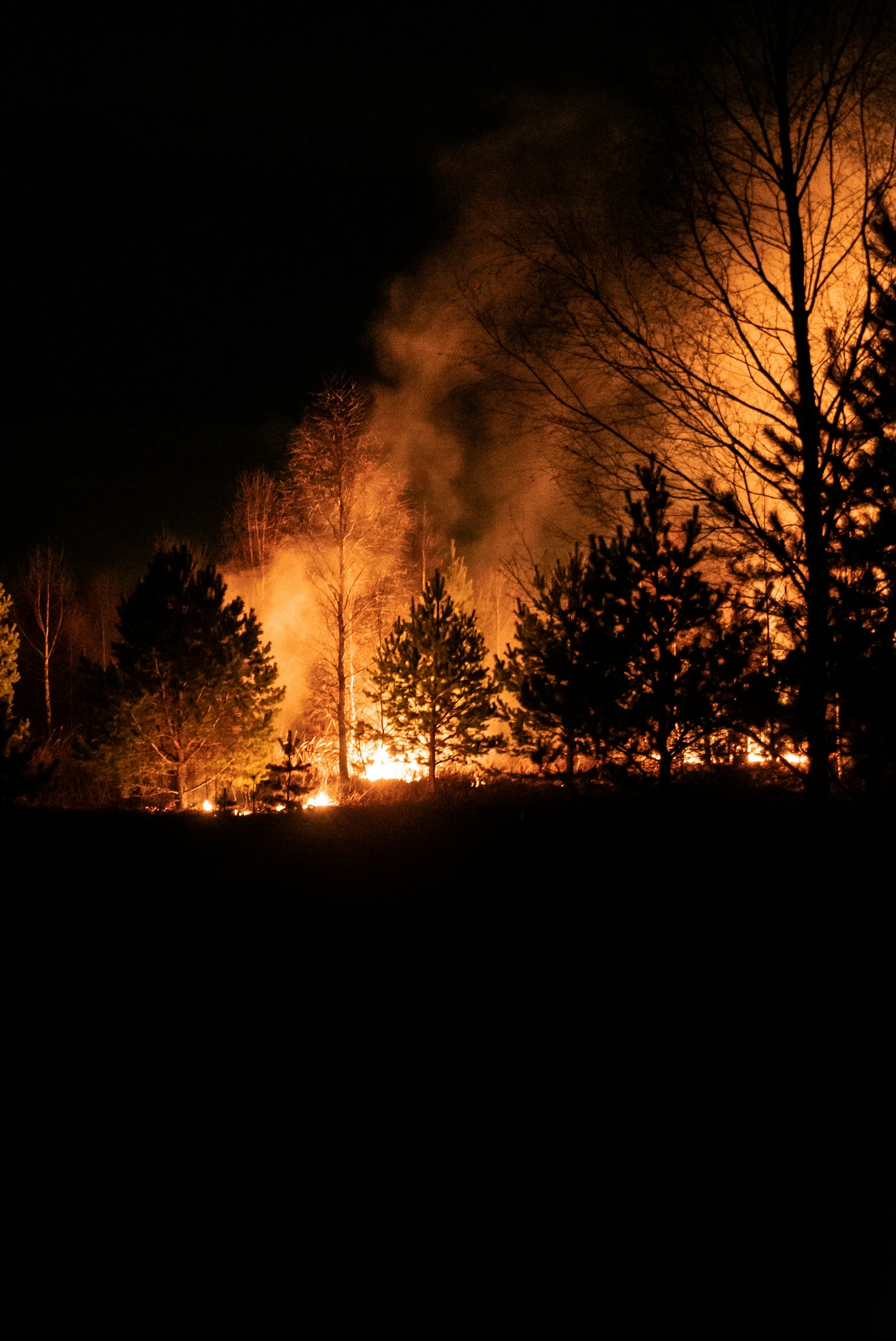
For years, most homeowners had a simple flat deductible, often $1,000 or $2,500. In wildfire-prone areas, that is changing. Some policies now carry a separate wildfire deductible, often a percentage of the dwelling limit, which can mean paying tens of thousands of dollars before insurance pays. Here is how fire deductibles work.
Flat deductibles
A flat deductible is a fixed dollar amount subtracted from a covered claim. With a $2,500 deductible and a $60,000 covered loss, the insurer pays $57,500.
Percentage deductibles
A percentage deductible is calculated as a percentage of a limit, usually the dwelling (Coverage A) limit, not the loss. A 2% deductible on a $500,000 dwelling limit is $10,000, whether the loss is $20,000 or $500,000.
Percentage deductibles have been common for wind, hail and hurricanes for years. They are increasingly applied to wildfire in high-risk areas.
Separate wildfire deductibles
Some insurers in California, Colorado and other western states use a separate deductible that applies only to wildfire losses. Reported wildfire deductibles range from about 1% to as much as 15% of the dwelling limit, and in Colorado's higher-risk ZIP codes percentage deductibles are common. In 2026, reports of unusually large wildfire deductibles in some California policies led the state's insurance department to announce a review.
A wildfire deductible usually applies to fires that are wildfires as defined in the policy, sometimes tied to a declared emergency or a fire that started outside the property. A kitchen fire would usually fall under your regular deductible. Read the definition.
A worked example
Illustrative numbers only. A home has a $600,000 dwelling limit, a $2,500 all-peril deductible and a separate 5% wildfire deductible. A wildfire damages the roof, siding and fencing, and the covered loss comes to $80,000.
- Under the all-peril deductible, the insurer would pay $77,500.
- Under the wildfire deductible, 5% of $600,000 is $30,000, so the insurer pays $50,000.
The same fire costs the homeowner $27,500 more because of the deductible type. If the home burned completely, the gap would still be $27,500, but it would be a much smaller share of the claim.
How the deductible is applied
- Once per occurrence. Most policies apply the deductible once per loss, not separately to the dwelling, contents and other structures.
- To the total covered loss. The deductible comes off the total covered amount, usually from the first payment.
- Not to living expenses in many policies. Check whether your deductible applies to additional living expenses.
- Scheduled property on a rider may have no deductible or its own.
When the deductible is bigger than the claim
Percentage deductibles hit partial losses hardest. A smoke and ash claim after a nearby wildfire might come to $20,000 for cleaning, repainting and contents. If the wildfire deductible is $30,000, the insurer may pay nothing for the house. Before you give up on the claim, check:
- Whether the wildfire deductible applies to smoke-only damage under your policy's definition.
- Whether living expenses are paid apart from the deductible.
- Whether the full scope has been captured, including HVAC cleaning, testing and contents. See wildfire smoke damage claims.
Two policies, two deductibles
In California, many homeowners in high-risk areas have a California FAIR Plan policy for fire and buy a separate difference in conditions (DIC) policy from another insurer to cover what the FAIR Plan leaves out. These are separate policies, with separate claims and separate deductibles. After a wildfire, you may pay a deductible on each. Ask both insurers how their deductibles apply to your loss. See California FAIR Plan claims.
What to check on your declarations page
- Your all-peril deductible.
- Any separate deductible for wildfire, wind or hail, earthquake or other perils.
- Whether the separate deductible is a dollar amount or a percentage, and what it is a percentage of.
- The endorsement that creates it, with its definition of wildfire.
See how to read your declarations page. An earthquake deductible applies to earthquake damage itself. A fire that follows an earthquake is usually a fire claim under your regular policy and deductible, even without earthquake coverage. See fire caused by an earthquake.
After a wildfire claim
If your insurer applied a wildfire deductible:
- Confirm the fire meets the policy's definition.
- Confirm the percentage was applied to the right limit and only once.
- Ask whether the deductible was disclosed and agreed to when the policy was issued or renewed. State rules on disclosure vary.
- Make sure the total claim is fully documented, so the deductible comes off the right number.
Can you lower it?
Some insurers offer a lower wildfire deductible for a higher premium, or credits for mitigation. Colorado's HB25-1182, effective July 1, 2026, requires insurers to disclose wildfire scores and offer discounts tied to mitigation work. Ask your agent before your next renewal.
Common questions
Does a wildfire deductible apply to smoke damage?
It depends on how the policy defines a wildfire loss. If smoke damage resulted from a wildfire as defined, the wildfire deductible may apply. Read the endorsement and ask the insurer in writing.
Is the deductible taken from my living expense payments?
In many policies, no, but some apply the deductible to the total claim including additional living expenses. Check your policy. See additional living expenses.
Can I negotiate a lower deductible after a fire?
Not for the current loss; the deductible in force on the date of the fire applies. You can change it at renewal.
Can my insurer add a wildfire deductible at renewal?
Insurers can change terms at renewal within state rules, usually with advance notice. Read every renewal packet for new endorsements and deductible changes, and ask your agent to explain any new wildfire deductible before the renewal date.
Does the mortgage company cover my deductible?
No. The deductible is subtracted before the insurer pays, so the check is smaller. The lender may still hold the dwelling payment for repairs, so the deductible amount has to come from you. See the mortgage company and your insurance check.
Help with a wildfire claim
ClaimWarriors reviews deductibles, limits and coverage on wildfire claims. See wildfire insurance claims, or contact us for a claim review.
Examples are illustrative. This article is general information, not legal advice. Deductibles depend on your policy. Last reviewed November 2026.




