Does Homeowners Insurance Cover Shower Leaks? Pans, Tile and Walls


Does homeowners insurance cover shower leaks? It depends on where the water escaped and for how long. A sudden failure of a pipe, valve or fitting behind the shower wall can be covered for the water damage it causes. Water that slowly gets past worn grout, cracked tile, failed caulk or a leaking shower pan over weeks or months can be denied as wear and tear or, under some insurers' forms, repeated seepage. Either way, the policy won't pay to rebuild the shower itself unless it has to be torn out to reach a covered leak.
Shower leak claims can be disputed because the damage can hide under the floor or in the ceiling below until it's large. This guide explains how insurers sort them, what your policy wording says, and how to give your claim the best chance.
Three kinds of shower leaks
Supply-side leaks
The hot and cold water pipes, the mixing valve and the shower arm sit inside the wall. When one of these cracks or a joint lets go, water sprays into the wall cavity under pressure. That is an accidental discharge from a plumbing system, the type of loss the standard homeowners form covers. Damage can show up fast, as a stain or wet floor in the next room or below.
Drain-side leaks
The drain, the drain gasket and the pipe under the shower carry water only while the shower runs. A cracked drain body or failed gasket leaks a little each time. Insurers may argue these are repeated leaks. Proof of a specific failure, such as a split drain body, helps.
Surface leaks through tile, grout, caulk or the pan
Grout and caulk wear out. Tile cracks. The waterproof pan or membrane under the tile can fail at a seam or around the drain. Water then seeps into the subfloor, framing and ceiling below each time the shower is used. These are the hardest to get paid, because the cause looks like wear and maintenance and the leaking is repeated by nature.
What the policy actually says
The standard ISO form, HO 00 03, excludes wear and tear, deterioration and latent defects. It then covers resulting loss from an accidental discharge or overflow of water from within a plumbing system, including the cost to tear out and replace part of the building to repair the system. The base 2011 form doesn't mention showers or tubs, and it has no repeated seepage exclusion.
Some insurers' own forms do. Policy language reviewed in court cases excludes, for example, continuous or repeated seepage or leakage from a plumbing system, including from, within or around any shower stall, shower bath, tub installation or other plumbing fixture, including their walls or floors. If your policy has that wording, a slow leak around a shower is squarely what it targets. If it doesn't, the insurer has to rely on wear and tear, and the water damage that results may still be covered.
So the first step is to find your policy's water wording and read it word for word. Our guide to slow leak claims denied for repeated seepage explains how these clauses are read.
Courts don't always side with the insurer
These exclusions turn on facts: how long the water leaked, and whether it was continuous or repeated. In May 2026, PropertyCasualty360 reported that a California Court of Appeal reversed summary judgment for State Farm in Nargizyan, finding triable issues of fact on a continuous seepage denial. In Florida, an appeals court held in Hicks v. American Integrity (2018) that a "14 or more days" clause did not clearly exclude damage from the first 13 days. A denial that rests on an assumption about duration is open to challenge if you have evidence.
What gets paid on a covered shower leak
- Opening the wall, floor or ceiling to reach the failed pipe or valve.
- Rebuilding what was opened, including tile when the shower wall had to come out to reach the valve.
- Water damage to the subfloor, framing, drywall, ceiling below and flooring outside the shower.
- Drying, and belongings damaged by the water.
Tile matching can be a dispute. If the plumber had to remove part of a tiled wall and the tile is discontinued, a patch won't match. Document why, with the tile maker's discontinuation or a tile contractor's written opinion.
What isn't paid
- Replacing worn grout, caulk or cracked tile.
- Replacing a shower pan that failed from age.
- The failed valve, drain or pipe itself.
- Damage the insurer can show built up over a long time, if your policy excludes repeated seepage.
- Mold beyond the policy's mold coverage. See mold insurance claims.
How to find out what kind of leak you have
A plumber or leak detection company can test each part separately. One approach is to run the supply with the drain plugged, then flood-test the pan with the drain blocked, then run water only against the walls. Whichever test makes the leak appear points to the source. Ask for the findings in writing, with photos. If the source is a cracked fitting or valve behind the wall, say so in the claim.
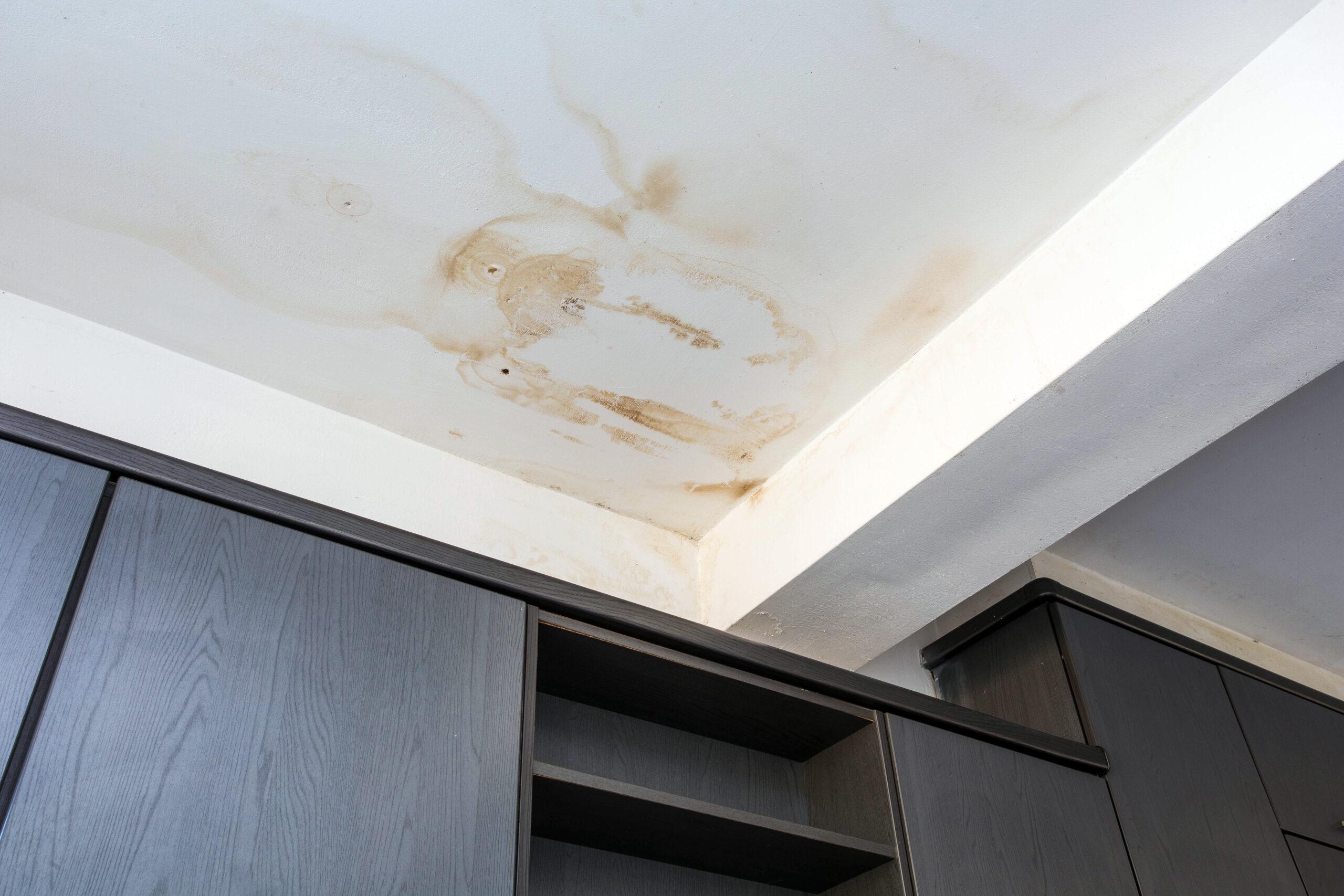
Look at the damage, too. Fresh water staining with no rot points to a recent failure. Black, soft subfloor and layered stains in the ceiling below point to a long leak, and the insurer will notice them.
Ceiling damage below a shower
The first sign of a shower leak can be a stain on the ceiling below. The ceiling repair is part of the same claim and follows the same coverage decision. If the cause is covered, the ceiling, insulation and paint below are too. See ceiling water damage claims.
How to file a shower leak claim
- Stop using the shower and photograph every sign of water, including the ceiling or room below.
- Get a plumber's written report identifying the source and how it failed. Keep the failed part.
- Start drying the affected areas and keep the invoices.
- Report the claim as a leak from the specific source the plumber found. Don't guess at how long it has been leaking.
- Ask the insurer, in writing, for the exact policy wording if it denies or limits the claim.
- Get a contractor's estimate that includes tear-out, tile matching and the ceiling below.
A sudden overflow, like a tub left running, is a different kind of claim and can be covered. Our guide to toilet overflow claims explains overflow coverage. For the broader picture, see does homeowners insurance cover plumbing leaks.
If the claim is denied
Read the denial for the exact reason. If it says wear and tear, ask whether the insurer is denying the shower components or the water damage too. If it cites a repeated seepage clause, ask what evidence shows how long the water leaked. Then send your plumber's report and photos with a written request to reconsider. See water damage claim denied for denial reasons and how to answer each.
Common questions
Does homeowners insurance cover a leaking shower pan?
The pan itself, no. Water damage from a pan leak can be denied as repeated seepage or wear and tear, but the outcome depends on your policy wording and the evidence of how long it leaked.
Does insurance cover a shower valve leak behind the wall?
The water damage can be covered as an accidental discharge from plumbing, along with the tear-out needed to reach the valve. The valve itself is not.
Will insurance pay to retile my shower?
Only the tile that had to be removed to reach a covered leak, plus matching if the old tile can't be matched. Worn grout and cracked tile are maintenance.
How do I prove a shower leak was sudden?
A plumber's report on the failed part, photos of fresh damage without rot or long-term staining, and the date you first noticed the water.
Need help with a shower leak claim?
ClaimWarriors reviews the policy wording and the evidence on water claims that insurers call long-term. See our water damage claim services or contact us for a free review.
This article is general information, not legal advice. Water exclusions differ by insurer and state. Last reviewed November 2026.