How Much Does Insurance Pay for Water Damage?


How much does insurance pay for water damage? Triple-I reports that the average homeowners claim for water damage and freezing was about $17,240 from 2020 to 2024. Your own payout is built from your claim: the cost to repair covered damage and replace damaged belongings, minus your deductible, minus any depreciation the insurer holds back until repairs are done, and capped by any special limits, such as those for mold or sewer backup. Knowing how each piece works is the best way to make sure nothing is left out.
This guide breaks down how a water damage payout is calculated, the limits that can cap it, and the reasons it comes in low.
The average water damage claim
Using ISO data, Triple-I puts water damage and freezing claims at about 1.42 per 100 insured homes per year for 2020 to 2024, about one in 70 homes, with an average claim of about $17,240. That average mixes small kitchen leaks with burst pipes that soaked two floors. It's a useful benchmark, but it doesn't tell you what your claim is worth.
How a water damage payout is built
A homeowners payout can have these parts:
- Emergency mitigation, such as water extraction, drying equipment and moisture monitoring.
- The building repair, including tear-out, drywall, insulation, flooring, cabinets, trim, paint, and the work needed to reach the leak.
- Your belongings, such as furniture, rugs, electronics and clothing.
- Additional living expenses if you had to move out during repairs.
- Code upgrades required by the building department during repairs.
From the total, the insurer subtracts your deductible. The standard ISO form, HO 00 03, pays only the part of the loss that exceeds the deductible, and if two deductibles apply, only the higher one is used.
Replacement cost, actual cash value and depreciation
The standard form pays replacement cost for the house if you carry insurance of at least 80% of the full replacement cost, but it pays no more than actual cash value until the repair is actually done. In practice, the first check is the replacement cost minus depreciation. The withheld depreciation is paid once you complete the repairs. To get it, the standard form requires you to tell the insurer within 180 days after the loss that you intend to repair. Our guides to actual cash value vs replacement cost and recoverable depreciation explain the process.
Belongings work the same way if your policy has replacement cost on contents. If it pays actual cash value, depreciation is taken off and not paid back.
Limits that can cap a water claim
- Mold or fungi limit. Policies can cap mold removal. ISO's basic mold endorsement option is $10,000.
- Water backup endorsement limit, offered at amounts such as $5,000 to $25,000, for sewer backup and sump overflow.
- Service line endorsement limit, with a $10,000 basic limit in ISO's version, for buried pipes.
- Ordinance or law coverage, which is up to 10% of the dwelling limit in the standard form, for code upgrades.
- Special limits on certain belongings, such as jewelry and firearms for theft, which matter less in water claims but can still apply.
Example: how one claim adds up
A supply line to an upstairs bathroom sink splits while the family is out. Water runs through the floor into the kitchen ceiling below.
Mitigation and drying cost $4,200. Building repairs in the bathroom, hallway and kitchen come to $21,500 at replacement cost, with $3,800 of depreciation. Damaged belongings total $3,100, and the hotel and meals for nine days come to $2,050.
Total covered loss: $30,850. With a $1,000 deductible, the first payments total $26,050, with the $3,800 depreciation withheld. After the repairs are finished and the insurer is notified, the depreciation is released, bringing the total to $29,850. The supply line itself, which cost about $15, is not covered. These figures are illustrative.
Why water payouts come in low
The scope is too small
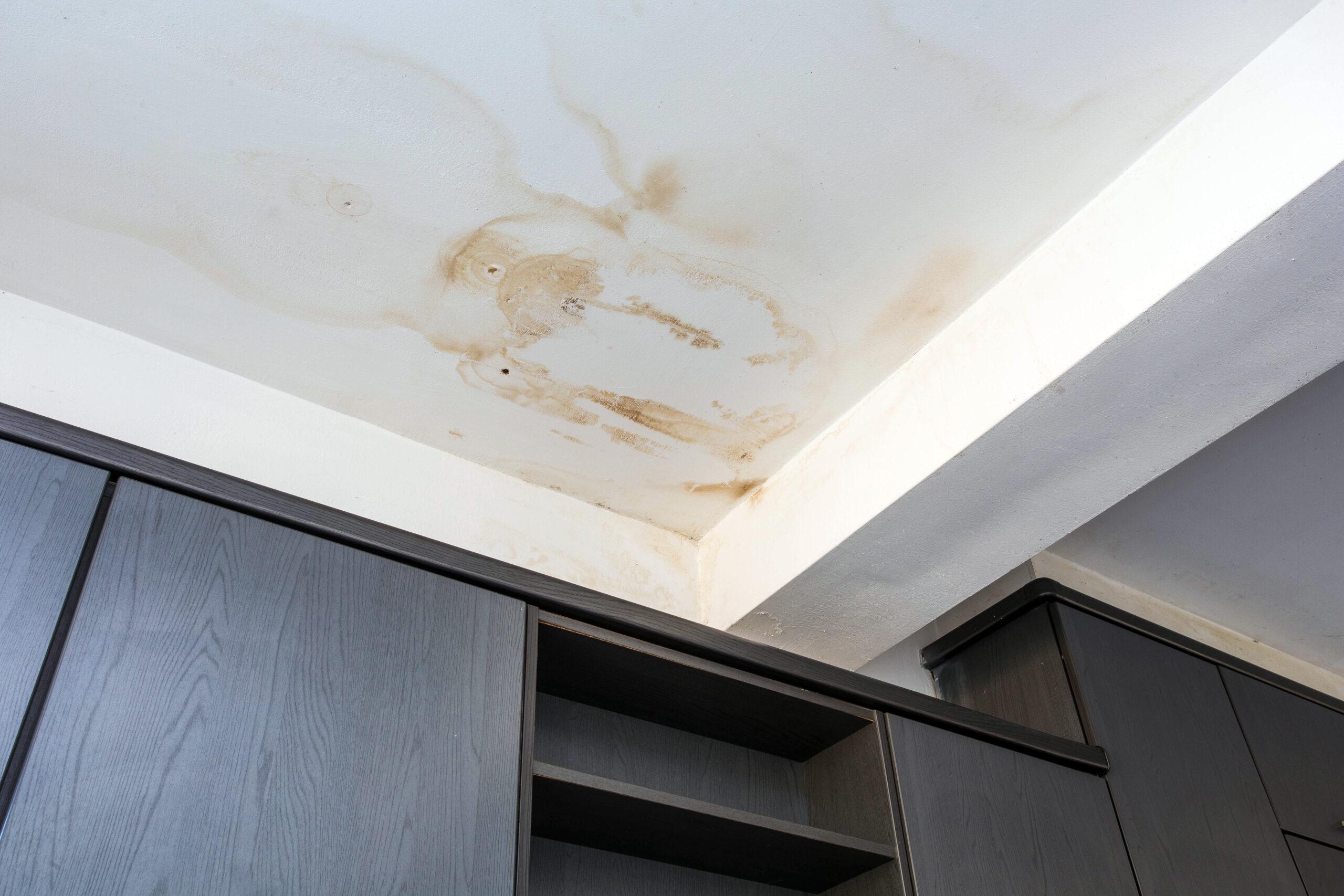
The insurer's estimate may cover the visible damage and miss what's behind walls, under flooring and in the ceiling below. Moisture readings and photos taken during drying show the real extent.
Patch repairs where matching is needed
Flooring that runs through several rooms, a discontinued tile around a shower, or a ceiling texture that can't be blended may need replacement across a larger area. See how to negotiate with an insurance adjuster, and for tile, shower leak claims.
Missing tear-out
The standard form pays to tear out and replace parts of the building needed to repair the system that leaked. Estimates sometimes price a small access hole only. See does homeowners insurance cover plumbing leaks.
Mitigation bills cut
Insurers sometimes question the number of drying days or equipment. Daily moisture logs from the drying company are the answer. See water mitigation in an insurance claim.
Excessive depreciation
Check the age and condition the insurer assigned to each item, and ask for the depreciation figures in writing if they aren't on the estimate.
Part of the claim pushed under a low limit
Water-damaged drywall and flooring shouldn't be moved under the mold limit just because some mold appeared. Separate the water repair from the mold work.
How to document the claim for full value
The payout follows the paperwork. Before anything is thrown away, photograph every damaged room from the doorway and up close, and photograph labels and serial numbers on damaged electronics and appliances. Ask the drying company for its daily moisture readings and a map of the wet areas. Keep the plumber's invoice that names the failed part. Build the contents list room by room with the item, its age and what a comparable replacement costs today. Then compare the insurer's estimate with your contractor's line by line, and send the differences in writing with the evidence attached. A claim documented this way is harder to underpay and faster to settle.
Should you file a small water claim?
If the repair is close to your deductible, the payout may be small, and a claim can still affect your premium. NerdWallet's 2026 analysis found that one wind or weather claim raised the median premium about 10%. That figure covers weather claims, so a plumbing leak may affect your premium differently. See will my homeowners insurance go up after a claim before deciding. For larger losses, file promptly. Late reporting creates its own problems.
For how long payment takes once the claim is filed, see how long a water damage insurance claim takes.
Common questions
What is the average payout for a water damage claim?
Triple-I puts the average homeowners water damage and freezing claim at about $17,240 for 2020 to 2024. Your claim may be much smaller or larger.
Does insurance pay replacement cost for water damage?
For the house, under the standard form, once repairs are complete. Until then, the standard form pays actual cash value and holds back depreciation. Belongings depend on your policy.
How is a water damage settlement calculated?
The cost to repair covered damage and replace damaged belongings, plus living expenses, minus your deductible and any depreciation withheld, up to your limits.
Can I get more money for my water damage claim?
Yes, if the estimate missed damage or underpriced work. Send a written counter with photos, moisture readings and a contractor's estimate. A public adjuster can do this for you on larger claims.
Want to know what your water claim should pay?
ClaimWarriors builds full estimates for water losses and negotiates the difference. See our water damage claim services or contact us for a free claim review.
This article is general information, not legal advice. Payouts depend on your policy, limits and damage. Last reviewed November 2026.