

California Fire Insurance Law for Homeowners: What Changed in 2026

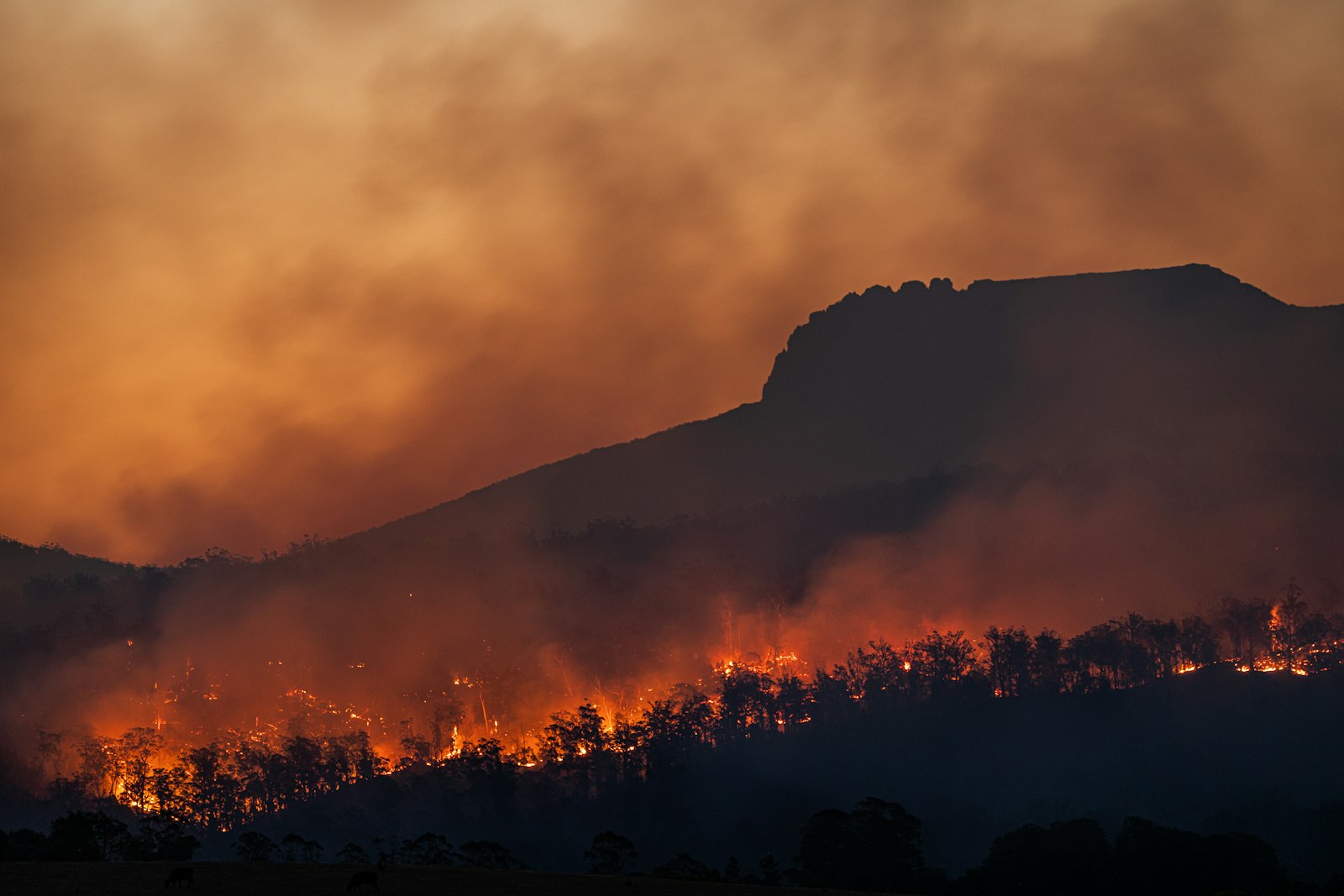
California has the most detailed set of wildfire insurance protections in the country, and they changed again in 2025 and 2026 after the Los Angeles fires. This guide summarizes the main California fire insurance laws for homeowners as of November 2026, what changed recently, and what still depends on your policy. Laws change often; check the California Department of Insurance (CDI) for current guidance on your fire.
Contents after a total loss: no itemized inventory up front
Under SB 495, effective January 1, 2026, when a home is a total loss in a declared state of emergency, the insurer must offer an advance payment of at least 60% of the contents (personal property) limit, up to $350,000, without requiring an itemized inventory. Before 2026, the rule was 30% up to $250,000. You can still submit a full inventory to collect the rest of your contents limit, and you get extra time to do it. See the house fire inventory guide.
Additional living expenses
- After a loss related to a state of emergency, ALE must be available for at least 24 months from the loss, with up to 12 more months if you are delayed by circumstances beyond your control while acting in good faith, still subject to your policy limit.
- After a total loss in a state of emergency, you can request an advance of at least four months of ALE.
- Insurers must give you a list of ALE categories on request.
- If a civil authority order keeps you out, ALE is available for at least two weeks, with extensions.
See additional living expenses after a fire and evacuation costs.
Time to rebuild and collect replacement cost
- You have at least 36 months from the first actual cash value payment to collect full replacement cost after a state of emergency loss, with six-month extensions for good cause.
- You can rebuild at another location or buy an existing home elsewhere without losing replacement cost benefits, subject to the policy limit.
See recoverable depreciation after a fire.
Smoke damage: the new Smoke Damage Recovery Act
AB 1795, signed in September 2026 and taking effect January 1, 2027, creates a presumption that smoke, ash and soot in a surviving home in a wildfire impact zone came from the wildfire, sets inspection and payment timelines for insurers that choose to inspect, requires insurers to pay for necessary testing, and keeps ALE in place until the home is restored and safe. Until then, the existing claim rules and CDI guidance on smoke claims apply. See wildfire smoke damage when the house didn't burn and smoke damage testing.
Renewal and cancellation protections
- After a state of emergency, insurers may not cancel or nonrenew policies in ZIP codes within or next to the fire perimeter for one year. AB 2038, signed in September 2026, extends this to two years.
- After a disaster-related total loss, the insurer must offer to renew for at least 24 months (36 months under AB 2038), and may not cancel while you rebuild, except for limited reasons.
See can your insurer drop you after a claim.
Claim handling deadlines
California's Fair Claims Settlement Practices Regulations require insurers to acknowledge claims within 15 days, accept or deny within 40 days after proof of claim (or explain why more time is needed every 30 days), and pay within 30 days after acceptance. You are entitled to a free copy of your policy within 30 days of request after a loss. See getting your policy.
Insurance money held by your mortgage servicer
Since AB 493 (2025), lenders must pay at least 2% simple interest on insurance proceeds held in loss draft accounts, and AB 1278 (2026) lets them pay that interest to you directly by check. See the mortgage company and your insurance check.
Public adjusters in disasters
Public adjusters may not solicit you until seven days after the fire or until an evacuation order is lifted in a catastrophic disaster, and you can cancel a public adjuster contract within five business days. California does not cap public adjuster fees by statute. See public adjuster fees.
Other protections
- Labor may not be depreciated in fire claims under California regulations.
- You may choose your own contractor. See using the insurer's contractor.
- Appraisal cannot be compelled after a government-declared disaster; both sides must agree. See the appraisal clause.
Smoke claims before 2027
Until AB 1795 takes effect, smoke claims depend on the policy wording and on how courts read "direct physical loss." The courts have not agreed. In Gharibian v. Wawanesa, decided in February 2025, a California appeals court held that wildfire debris that could be easily cleaned was not a direct physical loss. In April 2025 the California Supreme Court declined requests to depublish that decision, so insurers can cite it as precedent. In Bottega v. National Surety, in January 2025, a federal court in Northern California found coverage. The Department of Insurance said in Bulletin 2025-7, issued in March 2025, that smoke damage can be covered.
In these disputes, lab testing and a written cleaning or replacement scope carry the most weight. Keep both in your claim file.
Examination under oath rights
California Insurance Code section 2071.1 gives you specific rights when the insurer demands an examination under oath. The insurer may only ask about evidence that is relevant and reasonably necessary. It must give reasonable notice, pick a reasonably convenient place and keep the examination to a reasonable length. You may bring a lawyer and record the whole examination. You get the transcript or recording within 10 business days after the insurer receives it, and you can make sworn corrections. The insurer must send a copy of section 2071.1 with the demand.
Take the demand seriously. California courts have allowed insurers to deny a claim for refusing an EUO without showing the refusal harmed them. See examination under oath.
Deadline to sue and the 60-day notice
The California standard fire policy generally gives 12 months from the start of the loss to file a lawsuit against the insurer, or 24 months after a loss in a declared state of emergency. Under Prudential-LMI, a 1990 California Supreme Court decision, that period is paused from the time you report the claim until the insurer clearly denies it. Insurers must also notify you at least 60 days before a deadline such as the time to sue runs out. See the statute of limitations on a homeowners insurance claim.
County debris removal and your insurance
After a large wildfire, counties often run a debris removal program. To join it, you sign a Right of Entry form and assign the part of your insurance that covers debris removal. If your policy has a separate debris removal limit, that amount goes to the program. If debris removal is part of a larger coverage with no separate limit, the county generally collects only what is left over after you rebuild. You do not owe the difference if the program costs more than your coverage. See wildfire debris removal.
FAIR Plan policyholders
Many of these rules also apply to the California FAIR Plan, which has its own limits and gaps. See California FAIR Plan claims.
Other western states set their own wildfire rules. See Colorado wildfire insurance law, Oregon wildfire claims, Washington wildfire claims and Nevada, Utah, Idaho and New Mexico.
Common questions
How long do I get living expenses after a California wildfire?
After a loss related to a declared state of emergency, at least 24 months, with up to 12 more months for good-faith delays beyond your control, subject to your policy limit.
Do I have to list every item after a total loss in California?
Not at first. After a total loss in a declared emergency, the insurer must offer 60% of the contents limit, up to $350,000, without an itemized inventory. You can itemize to claim more.
Can I rebuild somewhere else in California?
Yes. California law lets you rebuild at another location or buy an existing home and still use replacement cost. See total loss house fire.
Do California insurers have to match undamaged items?
California regulations require insurers to replace all items in the damaged area when replacement items do not match in quality, color or size, so the area has a reasonably uniform appearance. Courts have said a perfect match is not required. See insurance matching laws.
How does a California insurer have to justify depreciation?
Depreciation must reflect a measurable difference in market value because of the item's age and condition, and the insurer must explain the basis in writing. See depreciation on personal property.
Help with a California wildfire claim
ClaimWarriors handles fire and wildfire claims in California. See our California fire claim services and the wildfire claim guide, or contact us for a claim review.
This article summarizes California law as of November 2026 and is not legal advice. Some protections apply only to declared states of emergency. Check CDI guidance for your fire. Last reviewed November 2026.




