Does Homeowners Insurance Cover Storm Damage?


Does homeowners insurance cover storm damage? Yes, for much of what a storm does to a house. Standard policies cover wind, hail, lightning, the weight of ice and snow, and trees or debris that fall on the house. They don't cover flooding or surface water, which needs a separate flood policy, and they don't cover damage that was already there from wear. Your deductible, which may be a separate percentage for wind and hail, decides how much of a storm claim you pay yourself.
This guide breaks down storm damage by type, explains the limits that catch people out, and lists what to do in the first days after a storm.
What a standard policy covers
The ISO HO 3 form is a standard homeowners form that insurers use as a model. Its 2011 edition covers the house and other structures, such as a detached garage or fence, against any direct physical loss that isn't excluded. Wind, hail and lightning aren't excluded, so storm damage to the building is generally covered. Belongings are covered for a list of named perils that includes windstorm, hail, lightning and the weight of ice, snow or sleet.
Triple-I reports that from 2020 to 2024, wind and hail claims ran at about 2.97 per 100 insured homes a year, more than twice the rate of water damage claims, with an average claim of about $15,708.
Storm damage by type
Wind
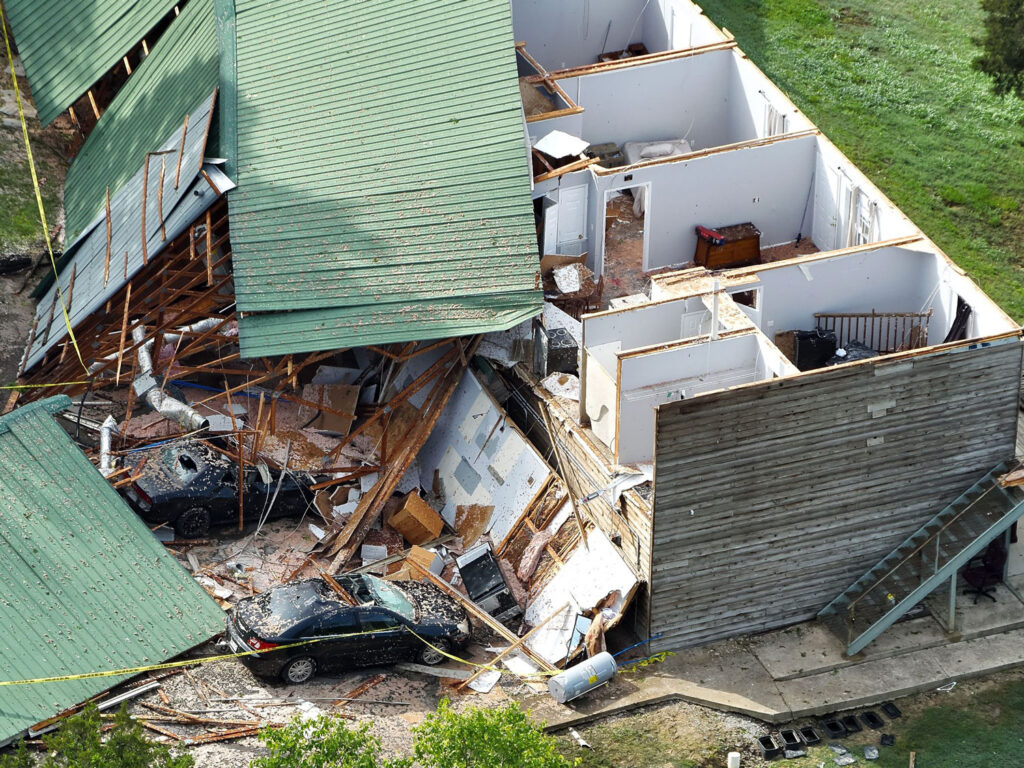
Wind that tears off shingles, siding, gutters or soffits is covered. So is a roof structure lifted or broken by wind. See wind damage to siding and windows.
Tornadoes
Tornado damage is wind damage, so it's covered the same way, under the same wind and hail deductible if your policy has one. See does homeowners insurance cover tornado damage.
Hail
Hail damage to roofs, siding, gutters, screens and outdoor units is covered. Some policies exclude cosmetic dents or settle older roofs at actual cash value.
Rain getting inside
For belongings, the standard form covers rain damage only if wind or hail first made an opening in the roof or walls. Some insurers apply a similar rule to the building. Rain that comes in through an old leak isn't covered. See does homeowners insurance cover broken windows.
Falling trees
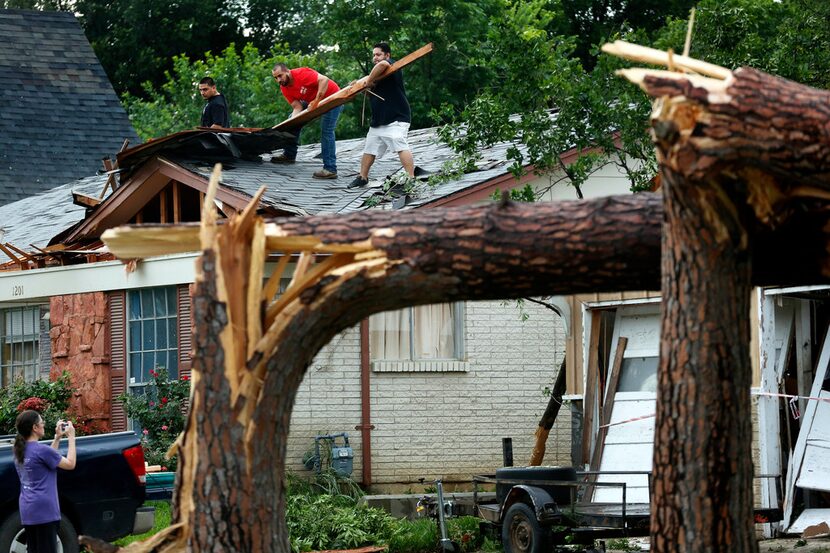
A tree that falls on the house, garage or fence is covered, whether it was yours or a neighbor's. Removing the tree is covered up to set limits. The standard form pays up to $1,000 per loss, and $500 for any one tree, to remove trees felled by windstorm, hail or the weight of ice or snow when they damage a covered structure or block a driveway or wheelchair ramp. See tree fell on house claims.
Lightning
Lightning fires and surge damage from a strike are covered.
Ice and snow
The weight of ice and snow that breaks rafters or collapses a porch roof is covered. Ice dams can be covered for the water damage, depending on your policy.
What isn't covered
- Flood, storm surge and surface water. These need a National Flood Insurance Program or private flood policy.
- Water seeping up through basement floors or foundations from saturated ground.
- Mudslides and landslides, which fall under the earth movement exclusion. See does homeowners insurance cover landslides.
- Damage from wear, rot or lack of maintenance that a storm only revealed.
- Your car, which is covered under the comprehensive part of an auto policy. See tree fell on your car.
- Trees, shrubs and lawns damaged by wind. The standard form covers landscaping only for listed perils such as fire, lightning and vandalism, not windstorm.
When wind and flood both hit
A storm can bring both wind and rising water. Your homeowners policy pays for the wind damage, and a flood policy, if you have one, pays for the flood damage. Insurers sometimes try to assign damage to flood when the evidence points to wind, or the reverse. Photograph wind damage above the water line, such as missing shingles, broken windows and torn siding, and note where the water line reached inside. Those details help each insurer pay its share.
Deductibles and limits that matter
In storm-prone states, policies can have a separate wind and hail deductible set as a percentage of the dwelling limit, such as 1%, 2% or 5%. On a $400,000 dwelling limit, a 2% deductible is $8,000. Some coastal policies have separate hurricane deductibles. Check your declarations page before you file.
Other limits that come up after storms:
- Other structures, such as fences, sheds and detached garages, are covered up to 10% of the dwelling limit unless you bought more.
- An actual cash value roof endorsement or roof payment schedule can cut what an older roof is paid.
- Additional living expenses are paid if the house is unlivable, up to the policy limit.
Decks, fences and outdoor structures
Storms can damage outside structures as well as the house. Fences, decks, sheds and detached garages are covered for wind and falling trees. See does homeowners insurance cover deck damage.
Example: one storm, three claims
A severe thunderstorm drops a large oak onto a detached garage, blows shingles off the house roof and shatters a living room window. Rain soaks the carpet through the broken window. A second tree falls across the yard without hitting anything.
The homeowner files one claim for the house, the garage and the interior water damage. The policy has a $2,000 deductible. The insurer pays for the garage under other structures coverage, the roof, the window, the carpet and the removal of the oak on the garage. It doesn't pay to remove the tree that fell in the open yard, because that tree didn't damage a structure or block the driveway. The homeowner's car, dented by a branch, goes to the auto insurer. These facts are illustrative.
What to do after a storm
- Check for safety hazards, such as downed lines and gas leaks. Stay out of damaged areas.
- Photograph and video all damage before cleanup, including the roof from the ground, siding, windows, fences and interior stains.
- Make temporary repairs to prevent more damage, such as tarping the roof or boarding windows. Keep receipts.
- Write down the storm date and save weather alerts.
- Report the claim promptly and ask whether a wind or hail deductible applies.
- Get written estimates from licensed local contractors and be careful with door-to-door contractors after big storms.
- Be present at the inspection and walk the adjuster around every damaged area.
For the full filing steps, see how to file a homeowners insurance claim.
Common questions
Does homeowners insurance cover water damage from a storm?
It covers rain that enters through an opening the storm created, such as a damaged roof or broken window. It doesn't cover flood or surface water.
Does homeowners insurance cover storm damage to trees?
Not to the trees themselves when wind knocks them down. It covers removal when a fallen tree damages a covered structure or blocks your driveway, up to set limits.
How long do I have to file a storm damage claim?
It depends on your policy and state. Some policies set a deadline for wind and hail claims, such as one year. Report as soon as you can.
Will a storm claim raise my rates?
It can. Some states limit increases after weather-related claims. Ask your agent how your insurer treats them.
Storm claim underpaid or denied?
ClaimWarriors documents storm damage across the whole property and negotiates with your insurer. See our storm and wind damage claim services or contact us for a free claim review.
This article is general information, not legal advice. Coverage depends on your policy and state law. Last reviewed November 2026.