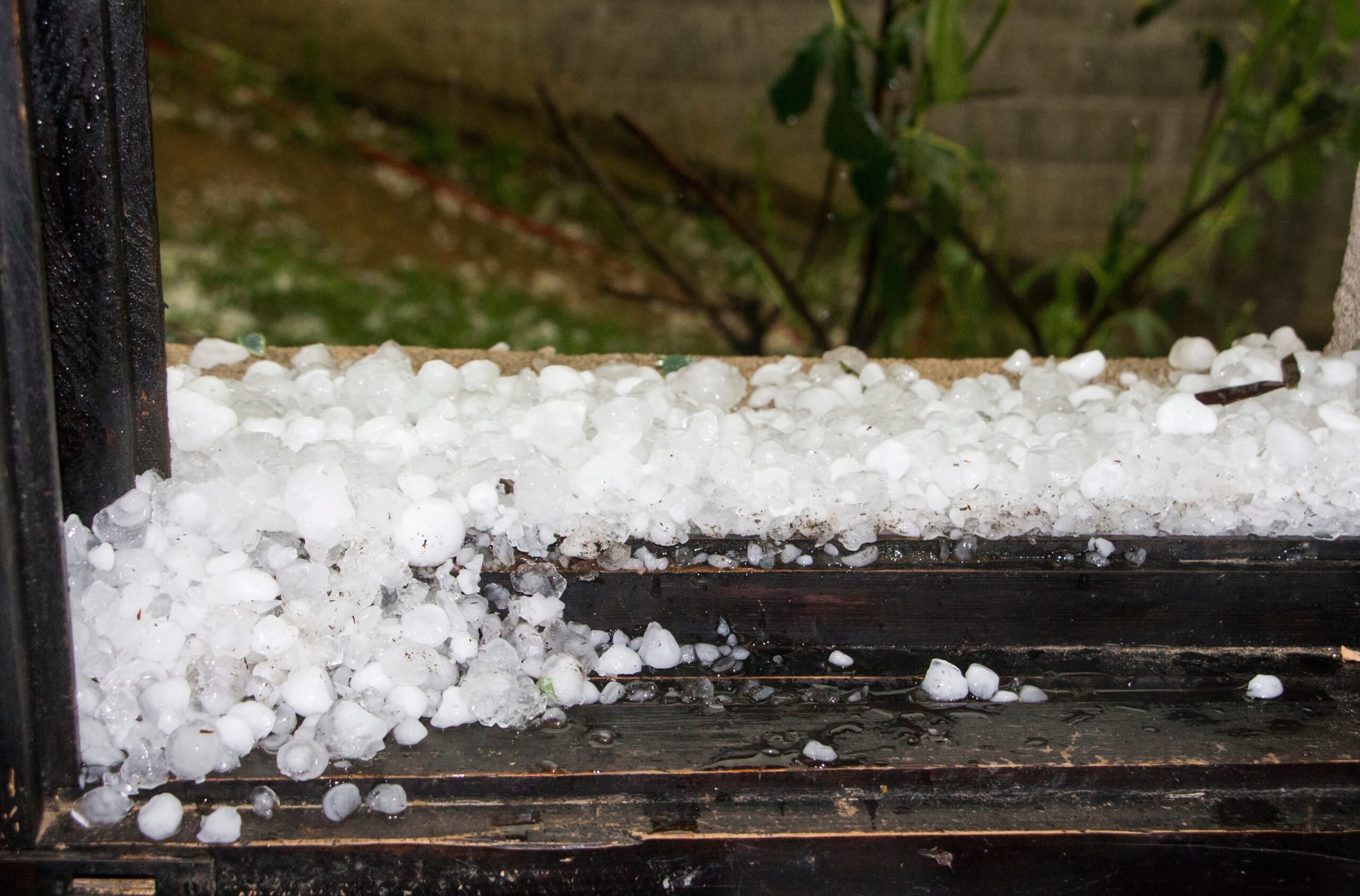
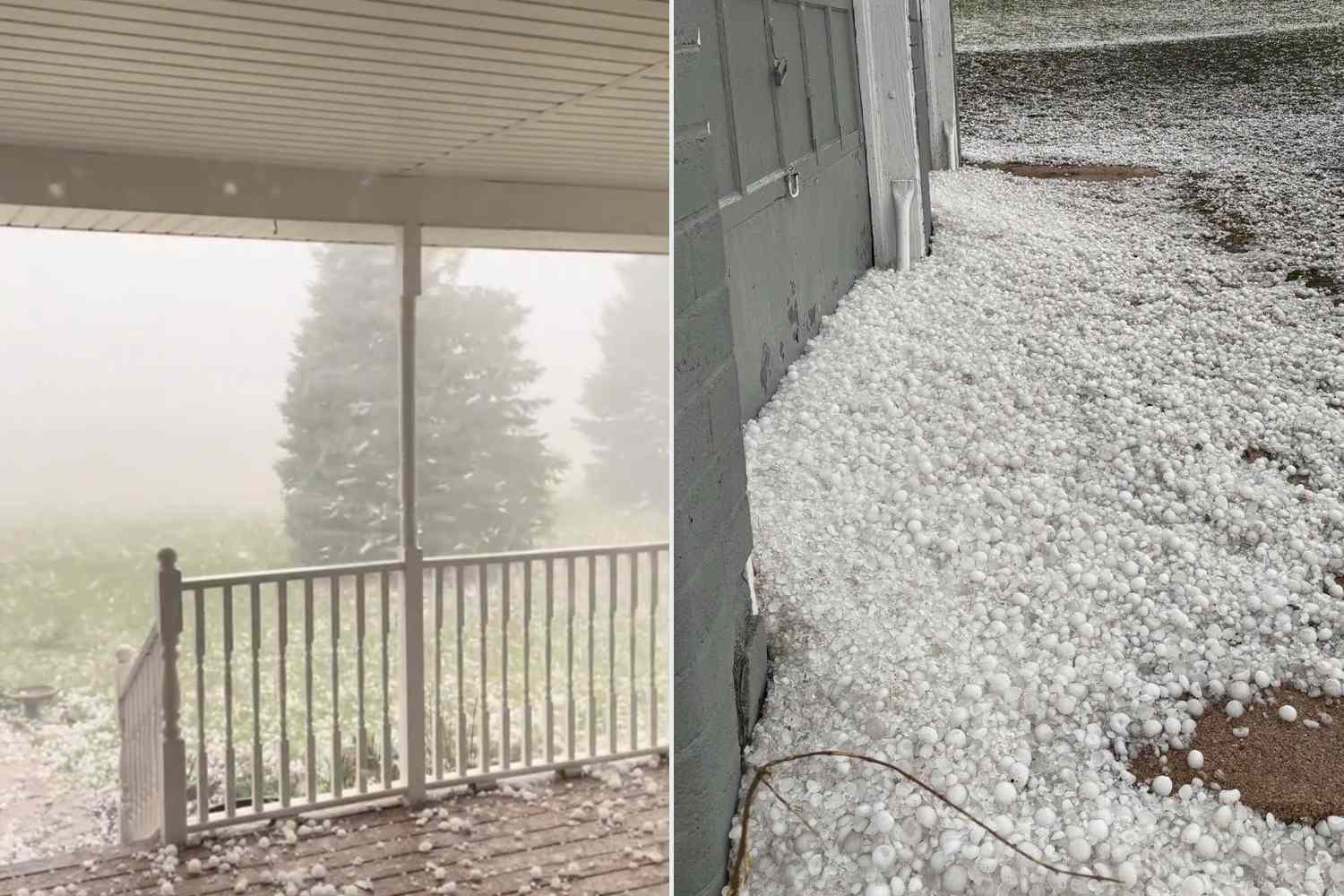
What Size Hail Damages a Roof? Signs to Look For


What size hail damages a roof? The National Weather Service treats hail 1 inch in diameter, about the size of a quarter, as severe, because damage studies showed that's about where significant damage starts. Larger hail does more: one NWS office describes 1 to 1.75 inch hail as causing minor damage and 1.75 to 2.75 inch hail as causing moderate damage. But size alone doesn't decide it. Wind, the hail's density, the roof's age and material, and how many stones fell all matter, and recent research shows that heavy smaller hail can age shingles faster too.
This guide explains how hail size relates to roof damage, what damage looks like on different roofs, and how to check before you call your insurer.
Hail sizes the weather service uses
The National Weather Service compares hail to everyday objects. Its spotter guide lists, among others:
- 3/4 inch, penny size.
- 7/8 inch, nickel size.
- 1 inch, quarter size, the severe threshold.
- 1 1/4 inches, half dollar size.
- 1 1/2 inches, ping pong ball or walnut size.
- 1 3/4 inches, golf ball size.
- 2 3/4 inches, baseball size.
The weather service raised its severe threshold from 3/4 inch to 1 inch in January 2010. It now adds a "destructive" tag to warnings for hail of 2.75 inches or larger.
What size damages which roofs
Roofing materials respond differently. As a general guide:
- The National Weather Service treats hail of 1 inch or larger as severe, and IBHS research found that weathered shingles are more vulnerable to later hail.
- Impact-resistant shingles rated Class 4 under UL 2218 must withstand a 2-inch steel ball dropped from 20 feet without cracking. They hold up better, but they aren't hail-proof.
- Wood shakes can split, especially when they're old and dry.
- Metal roofing can dent from hail, and whether dents count as damage may depend on a cosmetic damage exclusion.
- Gutters, downspouts, vents and window screens dent easily and are good indicators of what hit the roof.
The industry has long debated the threshold for laminated asphalt shingles. Forensic engineers have cited about 1.25 inches as the size needed to damage them. Research from the Insurance Institute for Business and Home Safety points to a more complicated picture.
Smaller hail still matters
In September 2025, researchers at IBHS published a study in Frontiers in Materials on sub-severe hail, meaning stones under 1 inch. They found that high concentrations of small hail knock granules off asphalt shingles and speed up their aging. Shingles that had been naturally weathered and then hit by two simulated small-hail events became up to ten times more vulnerable to damage from later large hail, according to IBHS.
That doesn't mean every small hailstorm creates a covered claim. It does mean an insurer's statement that "hail under an inch doesn't damage roofs" isn't the whole story, especially on a roof hit repeatedly.
What hail damage looks like
On asphalt shingles
- Dark spots where granules were knocked off, which can look round and random.
- Soft spots that feel like a bruise when pressed, where the mat underneath is fractured.
- Cracks or punctures in the shingle.
- Granules piled in gutters and at downspout outlets after the storm.
On metal, wood and other surfaces
- Round dents in metal panels, vents, flashing and gutters.
- Fresh splits in wood shakes with sharp, light-colored edges.
- Dents or spatter marks on siding, fences, outdoor units and painted surfaces.
Look for hits spread across a slope, and compare the slopes facing the storm with the others. Damage that is uniform, follows a pattern, or appears only in high-traffic or sun-exposed areas may be blistering, wear or foot traffic, which insurers treat as uncovered.
Why one roof is damaged and the next isn't
Hail falls in swaths, so one street can be hit hard while the next sees little. Within the same swath, roofs still fare differently. Slopes facing the storm take direct hits, and wind-driven hail strikes harder and at an angle. Older shingles that have lost granules and flexibility break more easily than new ones. A roof with good decking support resists better than one over soft or gapped boards. That's why a neighbor's claim doesn't decide yours, and why your roof should be inspected on its own.
How to check after a storm
- Measure or photograph hailstones next to a coin or ruler if you can do so safely.
- From the ground, look at gutters, downspouts, vents, mailbox, outdoor AC unit and window screens for dents.
- Check gutters and downspout outlets for heavy granule loss.
- Look for storm reports. The NWS takes hail reports, and NOAA's Storm Events Database lists hail by county and date, which can take a few months.
- Have a licensed roofer inspect the roof itself. Don't climb on it yourself.
How insurers measure hail damage
Adjusters can mark a 10-by-10-foot test square on each slope and count hail hits. InterNACHI notes that insurers set their own thresholds and that eight hits is a common number. One clean test square doesn't prove the roof is undamaged, so ask that every slope be inspected. Ask the adjuster which slopes were tested and how many hits were counted on each, and keep those numbers for your file. See what to expect at an insurance roof inspection.
If your roof has metal parts or is a metal roof, read your policy for a cosmetic damage exclusion. These exclude dents that change appearance but don't let water in. See cosmetic hail damage exclusions.
From damage to a claim
If you find hail damage, file promptly. If the insurer offers only a repair, see how to get insurance to pay for roof replacement. Some policies set deadlines for wind and hail claims. Our guides on how to file a hail damage claim and how much insurance pays for hail damage on a roof walk through the next steps. If the insurer says there's no hail damage, see hail damage claim denied.
Common questions
Can pea-size hail damage a roof?
Hail well below the NWS severe threshold may leave no visible damage on its own, though IBHS research found repeated small hail can age shingles.
Does 1-inch hail damage a roof?
It can, especially on older asphalt shingles. One-inch hail is the National Weather Service's severe threshold.
How do I know if hail damaged my roof?
Look for dents on gutters, vents and screens, granules in the gutters, and dark or soft spots on shingles. A roofer's inspection confirms it.
Does hail damage show up right away?
Not always. Fractures under the granules may not be visible from the ground, and damaged shingles can begin leaking later. That's why an inspection soon after the storm matters, even if nothing leaks yet.
Does insurance cover hail damage to a roof?
Yes, hail is a covered peril in standard homeowners policies, unless your policy excludes it or applies a separate wind and hail deductible. How much is paid depends on your deductible, roof age provisions and any cosmetic damage exclusion.
Not sure whether hail damaged your roof?
ClaimWarriors inspects and documents hail damage and handles the claim with your insurer. See our hail damage claim services or contact us for a free claim review.
This article is general information, not legal or engineering advice. Damage depends on the roof and the storm. Last reviewed November 2026.